Carlsbad Trilogy
- Common Ground 2021
Raymond Jonson
1891 Chariton, Iowa - 1982 Albuquerque, New Mexico
Carlsbad Trilogy
1928
oil on canvas
museum purchase, Director's Discretionary Fund
PC1981.26.1.A-C
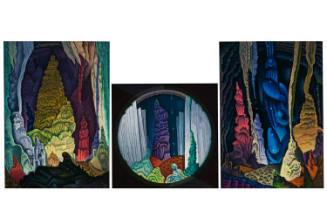
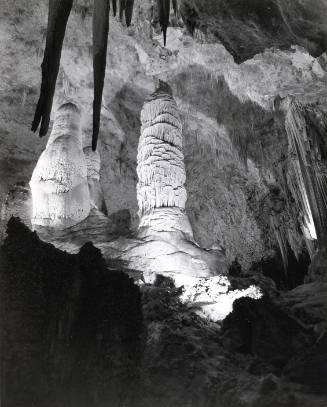
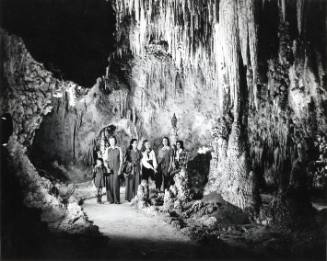
Although deeply moved by the powerful landscapes of New Mexico, Raymond Jonson did not typically paint landscapes in a strictly realistic manner. He restructured what he observed to create images of places that captured their vital essence, not just the way they looked. The otherworldly rock formations, effects of colored lights, and dripping water make this three-paneled painting almost more unearthly than Carlsbad Caverns themselves. Before this painting, few artists other than photographers had attempted to capture the wonder of these caves.
Jonson began teaching part-time at the University of New Mexico in 1934, and by then he had completely given up painting images of specific things or places. This painting bridges the gap between his skill for representing real places, and his desire to create whole new vocabularies that transcended references to the visible world.
Carlsbad Trilogy (Trilogía de Carlsbad)
1928
óleo sobre lienzo
adquisición del museo, Fondo discrecional de la dirección
PC1981.26.1.A-C
Aunque se sentía profundamente conmovido por los impresionantes paisajes de Nuevo México, Raymond Jonson no pintaba los típicos paisajes en un sentido estrictamente realista. Él reestructuraba lo que observaba para crear imágenes de lugares que captaban su esencia vital, no solo su aspecto. Las asombrosas formaciones rocosas, los efectos de las luces de colores y el goteo del agua convierten a esta pintura realizada en tres paneles en una imagen aún más sobrenatural que las propias cuevas de Carlsbad. Antes de esta pintura, muy pocos artistas aparte de los fotógrafos se habían atrevido a captar las maravillas que albergan estas cuevas.
Jonson empezó a dar clases a tiempo parcial en la Universidad de Nuevo México en 1934 y por entonces ya había abandonado por completo la pintura de objetos o lugares específicos. Esta pintura establece un puente entre su habilidad para representar lugares reales y su deseo de crear formas de expresión completamente nuevas que trascienden las referencias al mundo visible.