Indian in a Corner
- Fritz Scholder in Frankfurt, Germany
Ingenio, humor y sátira
25 Junio 2022 – 29 Enero 2023
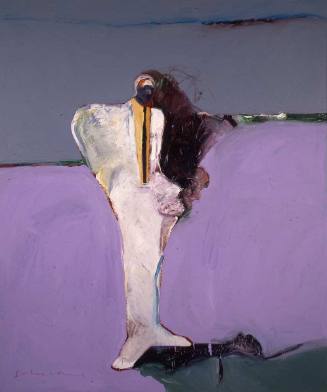
Fritz Scholder pasó buena parte de su carrera dibujando personas indígenas de formas que desafiaban los estereotipos románticos. A menudo, Scholder creaba una parodia directamente de las fotografías o las obras de artistas como Frederick Remington, rechazando los estereotipos que algunos artistas, incluido Remington, promovían. Indian in a Corner quizá estuviera sacado (o no) de una fotografía, pero independientemente de ello, Scholder saca a esta figura totalmente de contexto y la sitúa en un lugar interior oscuro que resulta surrealista y desconcertante. La figura aparece sentada pero no en una silla, lo que hace la imagen aún más inusual. La obra Scholder hace evidente la fetichización de la iconografía asociada a los pueblos indígenas y se niega a presentar a sus sujetos indígenas en situaciones falsas e idealizadas.
Exhibition: Wit, Humor, & Satire
on view June 25, 2022 - January 29, 2023
Fritz Scholder spent much of his career depicting Indigenous peoples in ways that challenged romantic stereotypes. Often Scholder would create a parody directly from photographs or works by artists such as Frederick Remington, pushing against the stereotypes that artists including Remington promoted. Indian in a Corner may or may not have been sourced from a photograph, but regardless, Scholder takes this particular figure completely out of context, placing it in a dark interior that is surreal and disorienting. The figure appears to be seated, but there is no chair, adding to the unusual nature of the image. Scholder’s work makes evident the fetishization of imagery of Native peoples by refusing to present his Indigenous subjects in idealized and false scenes.