
Coyote
- Common Ground 2021
Felipe Archuleta
1910 Santa Cruz, New Mexico - 1991 Tesuque, New Mexico
Coyote
1977
carved and painted wood with glass marbles and rubber
gift of Mary and David Corley
PC2008.28.1
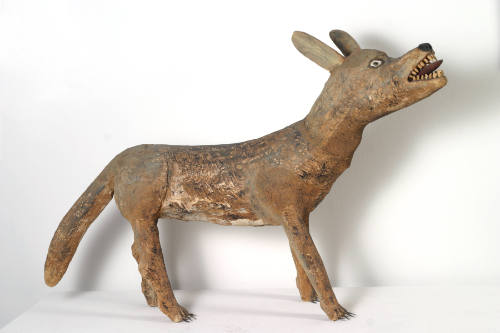
Few other carvers have been able to infuse their animals with such unexpected personality, and rough-hewn, dynamic energy as Felipe Archuleta. Coyote seems both fierce and playful, with a mouthful of scraggly teeth and sharp claws. Archuleta often incorporated common, everyday items into his works, such as the marbles he used for the coyote’s eyes and the inner-tube rubber for the claws.
Archuleta, a self-taught artist, began a prolific career in sculpture late in his life. He worked many years as a migrant farm laborer, cook, and stonemason for the Works Progress Administration (WPA) before joining a carpenters union in 1943. Upon retiring after more than twenty years in the carpentry trade, Archuleta pleaded with God that he be granted “some blessing or virtud (skill).” Thus inspired, he developed a talent for shaping commanding animal figures, none more so than this Coyote.
Coyote
1977
madera tallada y pintada con bolitas de vidrio y caucho
obsequio de Mary y David Corley
PC2008.28.1
Pocos tallistas han sabido impregnar sus esculturas de animales de personalidades tan sorprendentes y con una energía tan dinámica en el labrado inacabado como Felipe Archuleta. Coyote parece a la vez fiero y juguetón, con la boca llena de rudas fauces y garras afiladas. Archuleta incorporaba con frecuencia en sus obras elementos comunes y cotidianos, como las bolitas que utilizó para los ojos del coyote y el tubo interior para las garras.
Artista autodidacta, Archuleta comenzó su prolífica carrera como escultor en una etapa tardía de su vida. Trabajó muchos años como obrero agrícola migrante, cocinero y cantero para la Works Progress Administration (WPA) antes de unirse al sindicato de carpinteros en 1943. Cuando se jubiló tras más de veinte años trabajando en el oficio de la carpintería, Archuleta le rogó a Dios que le concediera alguna virtud (habilidad). Inspirado por ese deseo, desarrolló el talento de modelar imponentes figuras de animales, entre las cuales no hay mejor ejemplo que Coyote.